
Active 2.4GHz RFID: The Ultimate Solution for Long-Range, Real-Time Tracking of High-Value Assets
Introduction
As enterprise digitalisation accelerates, asset management has evolved far beyond periodic stocktaking.
1. Industry Background: Technology Divergence in a Hundred-Billion-Dollar Market
The global RFID market is in a phase of steady growth. According to industry reports, the market was valued at USD 16.73 billion in 2025. It is expected to reach USD 18.66 billion in 2026, growing to USD 32.19 billion by 2031. The CAGR is 11.52%.
China, as the world’s largest application market, accounted for 45% of global RFID tag shipments in 2025, with its domestic market size projected to exceed RMB 68 billion in 2026.
From a technology segmentation perspective, three major areas show divergent growth:
-
UHF (Ultra-High Frequency) RFID commands a 40.72% market share, with increasing penetration in logistics and industrial manufacturing, thanks to its long read range and batch identification capabilities.
-
Passive tags hold a 52.78% revenue share due to their ultra-low cost, continuously lowering the barrier to large-scale deployment.
-
Active RFID/RTLS (Real-Time Location Systems) is growing at a robust CAGR of 12.52%, precisely matching the need for real-time tracking of personnel and high-value assets.
In China, the active RFID asset management sub-segment is forecast to reach USD 203 million by 2032, with a CAGR of approximately 3.5% from 2026 to 2032. While the growth rate appears steady, the sector is undergoing a structural upgrade. Companies are moving from traditional passive inventory checks to real-time monitoring and intelligent alerting powered by active RFID.
2. Technology Positioning: The Role of 2.4GHz Active RFID in Asset Management
Within the RFID technology family, Active 2.4GHz RFID plays a unique and irreplaceable role. It is the optimal carrier for “long-range, active, real-time” asset management scenarios.
2.1 Relationship with Other RFID Technologies
In daily applications, we most commonly encounter two types of RFID:
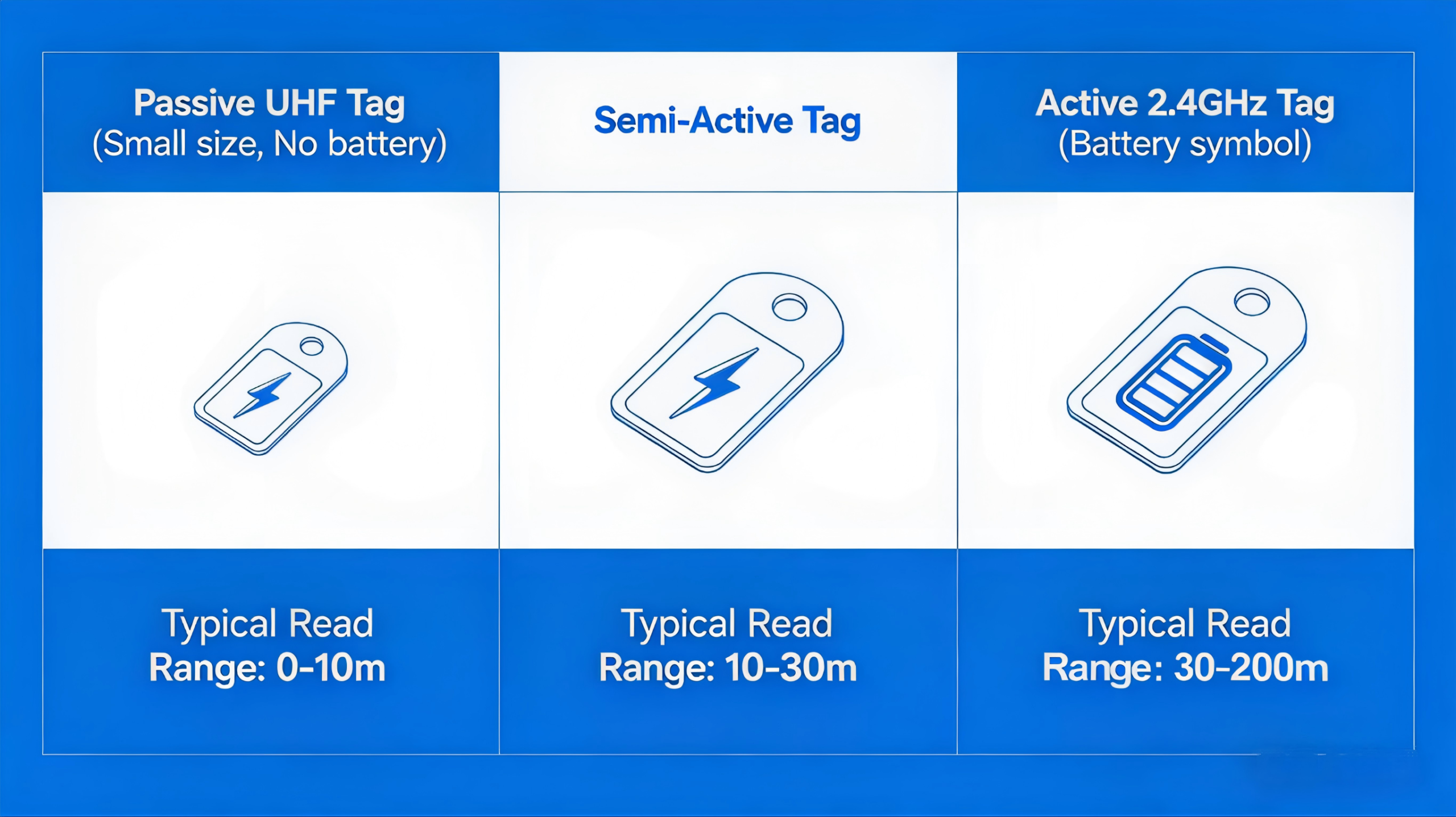
UHF RFID (860–960 MHz) is currently the most widely deployed technology, with typical read ranges from a few metres to just over ten metres. Thanks to extremely low tag costs and a mature industrial chain, it excels in warehouse entry/exit tracking, retail inventory, and logistics traceability. However, its limitations are obvious: it is significantly affected by metal and liquid environments. Additionally, it cannot enable active positioning or continuous monitoring.
Active 2.4GHz RFID (2.4–2.5 GHz ISM band), on the other hand, uses battery-powered tags that actively transmit signals, achieving read ranges of up to 80–200 metres. It sacrifices some cost advantages, as tags are significantly more expensive than passive ones. However, it provides ultra-long range, high-speed moving object identification, active positioning, and superior environmental adaptability.
These two are not mutually exclusive but complementary in an asset management system:
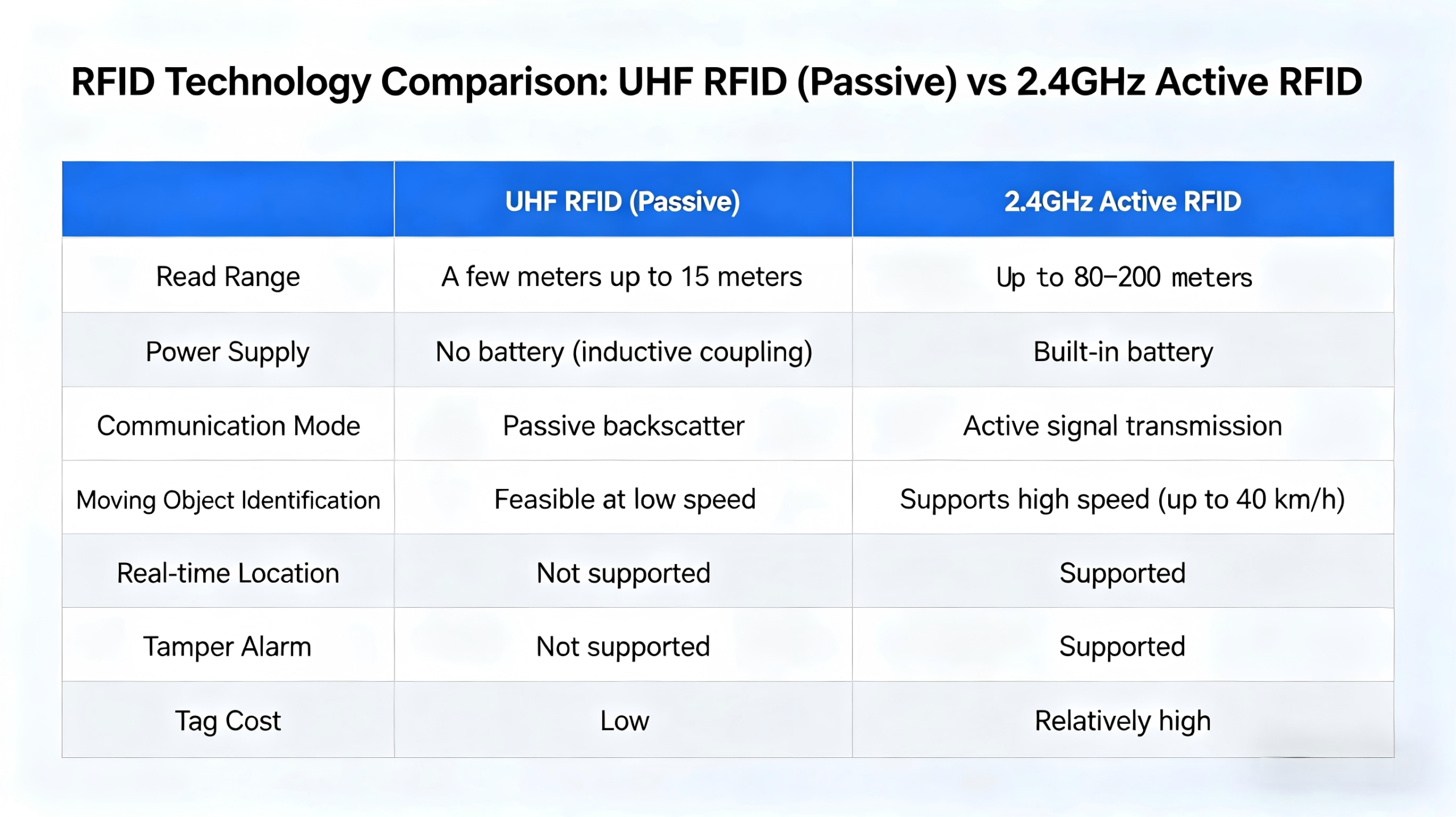
In simple terms: UHF RFID answers “Is the stock still in the warehouse?”, while 2.4GHz Active RFID answers “Where exactly is this high-value asset right now, and is it secure?”
3. Core Advantages: Why Active 2.4GHz RFID is the Best Choice for Asset Management
3.1 Unmatched Read Range
Active 2.4GHz RFID tags emit signals using internal batteries, achieving read distances of 80–100 metres. Some high-performance readers can even detect tags at ranges up to 400 metres. This capability gives it a natural advantage in large spaces such as mega-warehouses, industrial campuses, and port yards. It enables wide-area coverage without the need for a dense reader infrastructure. The device supports configuring the signal emission angle from 60° to 360°. Therefore, it satisfies both directional and omnidirectional identification needs.
3.2 Real-Time Monitoring and Proactive Alerts
Unlike traditional UHF RFID, which only scans tags at fixed checkpoints, 2.4GHz active tags can proactively emit signals every few seconds, continuously updating asset status to the back-end system. If an asset leaves the signal coverage area, someone removes a tag illegally, or the tag’s battery runs low, the system immediately sends out an alert. This “proactive warning” model is far more valuable for management than a “reactive trace” approach.
3.3 Excellent Anti-Collision and Bulk Reading
>>>>Advanced anti-collision algorithms allow 2.4GHz active systems to process large numbers of tags simultaneously. A single reader can identify 300–500 or more tags per second, with some systems managing up to 1,000 tags concurrently. In densely stored warehouses or workshops, the system can cover all assets without omission.
3.4 Simple Architecture, Flexible Deployment
A 2.4GHz active RFID system is architecturally straightforward: tags + readers + back-end management software. Users can install tags flexibly via adhesive, cable ties, screw mounts and other methods. Meanwhile, readers support multiple deployment options—indoor or outdoor, directional or omnidirectional, wall-mounted or pole-mounted—to adapt to diverse on-site conditions.
4. Deployment Scenarios and Application Value
4.1 On-Site Monitoring and Theft Prevention of High-Value Assets
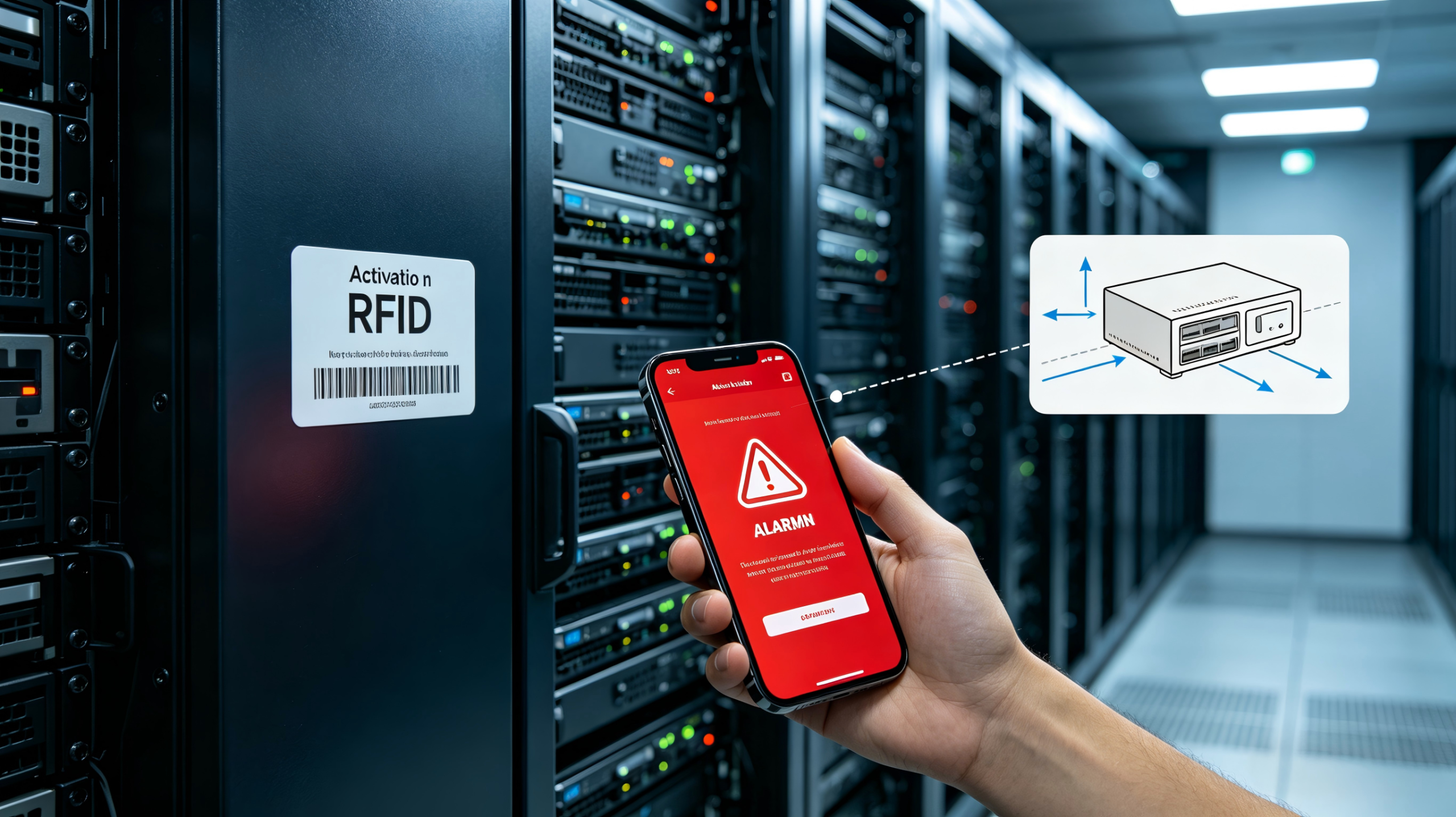
This is the most typical application for Active 2.4GHz RFID. By attaching a tag to each high-value asset and deploying readers in the controlled area, the system continuously monitors whether the asset is “present”. When assets move out of the monitored zone, the system triggers an immediate alert. As a result, it effectively prevents unauthorized removal.
A widely deployed 2.4GHz real-time asset monitoring system can achieve read distances of over 50 metres, enabling 24/7 monitoring. It solves the pain point of traditional access control systems being unable to identify “unauthorised carry-out”. As soon as a controlled asset leaves the signal coverage area, the system alerts. The electronic tags also use special tamper-proof technology; if someone attempts to remove a tag, it automatically transmits an alarm signal.
4.2 Intelligent Management of Campus and Enterprise Assets
A notable industry solution features an active RFID reader targeting campus and enterprise asset scenarios. By leveraging 2.4GHz active RFID technology, the solution helps customers build intelligent campus asset management. Collectors wirelessly send, receive and process data from active RFID tags, then forward the information to a wireless access point for further analysis. This enables full visibility and integrated management of all assets.
4.3 Industrial Equipment and Special Environment Asset Management
>>>In challenging environments such as power grids, oil & gas, petrochemical plants, and offshore platforms, 2.4GHz active RFID also excels. For instance, offshore oil material management adopts 2.45GHz active RFID technology, integrating appropriate hardware and data processing systems to enable intelligent management of material carriers throughout the entire process: inventory management, dispatch, transportation, dock loading, and arrival on the platform.</p>
2.4GHz fixes asset tags find wide application in university instrument management, enterprise and institutional asset management, power inspection and factory pallet inventory. They also support vehicle access monitoring and anti-theft tracking.
4.4 Vehicle and Mobile Asset Management
>>>The high-speed identification capability of 2.4GHz active RFID makes it especially suitable for vehicle management and mobile asset tracking. Readers can reliably identify tags at speeds up to 40 km/h, making the tags ideal for car park management and automatic recording of vehicle entry and exit in business parks.
5. Rational Selection: How to Make the Right Decision
While 2.4GHz active RFID offers significant advantages in asset management, a practical selection must still be based on specific scenarios.
5.1 When to Choose Active 2.4GH<strong>z RFID?
-
✅ Asset value is high, requiring real-time monitoring rather than periodic stocktaking.
-
✅ The management area is large and requires wide-area coverage (over 50 metres).
-
✅ Anti-theft alarm functionality is needed (tamper detection, boundary violation alerts).
-
✅ Assets may be obscured or made of special materials (metal surfaces).
-
✅ Hundreds to thousands of tags must be managed simultaneously.
5.2 When Might UHF RFID Be More Suitable?
-
✅ The number of assets is massive, budgets are limited, and tag cost is sensitive.
-
✅ The primary need is warehouse entry /exit inventory checks.
-
✅ The management area is concentrated, and fixed check in or check out portals can be established.
-
✅ Real-time positioning is not required; periodic scanning is acceptable.
5.3 Multi-Frequency Fusion: A Path Worth Noticing
In real-world projects, more and more solutions are adopting a “multi frequency fusion” strategy.
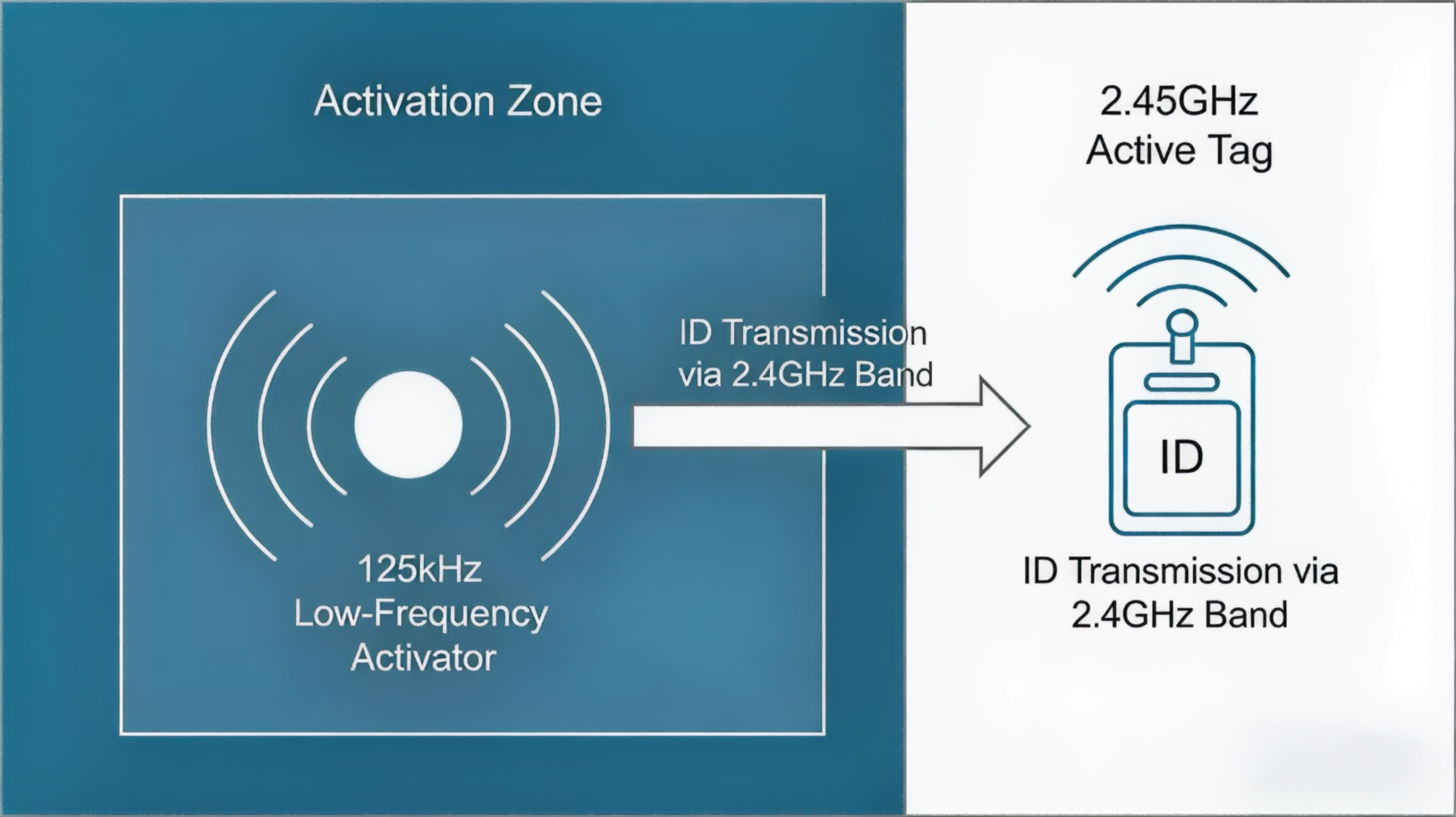
For example, the 125kHz + 2.45GHz semi-active scheme uses a low-frequency signal to precisely control the identification zone, while the high-frequency channel handles long range data transmission.
This combines “controllable identification range” with “extended read distance”. As a result, it effectively improves the accuracy of entry/exit identification and anti-theft capabilities in high value asset management.
active reader
6. Future Trends: From “Identification” to “Intelligent Control”
6.1 Accelerating Technology Convergence
Active 2.4GHz RFID is increasingly integrating with other technologies. Some systems already support dual-mode BLE and RFID operation, enabling more flexible deployment.
The universal nature of the 2.4GHz band allows active RFID to coexist and complement WiFi, ZigBee, Bluetooth, and other wireless technologies better.
6.2 Deepening Industrial Application
China’s domestic RFID industry chain keeps maturing.
This means the entry threshold for 2.4GHz active RFID will further lower, allowing more small and medium-sized enterprises to benefit.
6.3 AI Empowering Smart Decisions
The integration of RFID technology with cloud computing, big data, and artificial intelligence is driving the entire industry from “technology application” towards “value deep-dive”.
Future active RFID asset management will not only tell you “where the asset is”, but will also use data analytics to predict usage
trends, optimise resource allocation, and enable predictive maintenance.
Conclusion
There is no one-size-fits-all technology in asset management.
Let technology safeguard your assets, and let data speak for your decisions. Active 2.4GHz RFID is precisely the key to moving your asset management from “experience-driven” to “data-driven”.
About the author : Qerwin