I. Industry Pain Points: Bottlenecks in Traditional Golf Course Personnel Management
As high-end leisure venues, golf courses typically feature extensive land areas. These areas range from hundreds to thousands of mu. The courses also have complex terrain, including lawns, bunkers, water bodies, and woodlands. Additionally, there is scattered personnel (golfers, caddies, staff, visitors, etc.). Traditional management models face numerous challenges:
1.Difficulty in Personnel Positioning: Real-time location of golfers cannot be tracked, making it hard to respond quickly to emergencies (such as injuries or getting lost). Work trajectories of caddies and patrol personnel lack effective supervision, leading to inconsistent service efficiency.
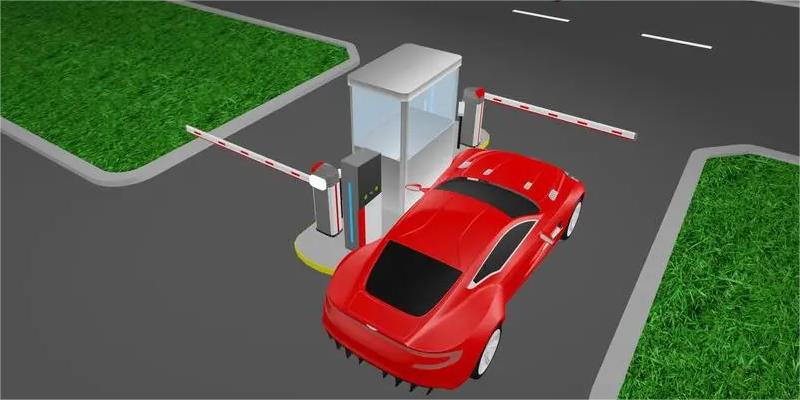
2. Chaotic Permission Control: Different access permissions are required for various areas of the course. These areas include the clubhouse, driving range, VIP zones, and equipment warehouses. Traditional methods like access cards and manual registration are prone to misuse. In addition, missed registrations can occur. Consequently, these issues pose potential safety hazards.
3.Tedious Attendance Statistics: Staff (such as caddies, lawn maintenance workers, and security personnel) work in scattered areas. Traditional clock-in methods fail to accurately record on-duty and off-duty times, resulting in inaccurate attendance data and increased difficulty in salary calculation.
4.Slow Emergency Response: In case of extreme weather (such as heavy rain or thunderstorms) or sudden accidents, it is impossible to quickly count the number and locations of on-site personnel, leading to low evacuation efficiency and potential safety risks.
II. Core Application Scenarios and Implementation Logic of 2.4G Readers
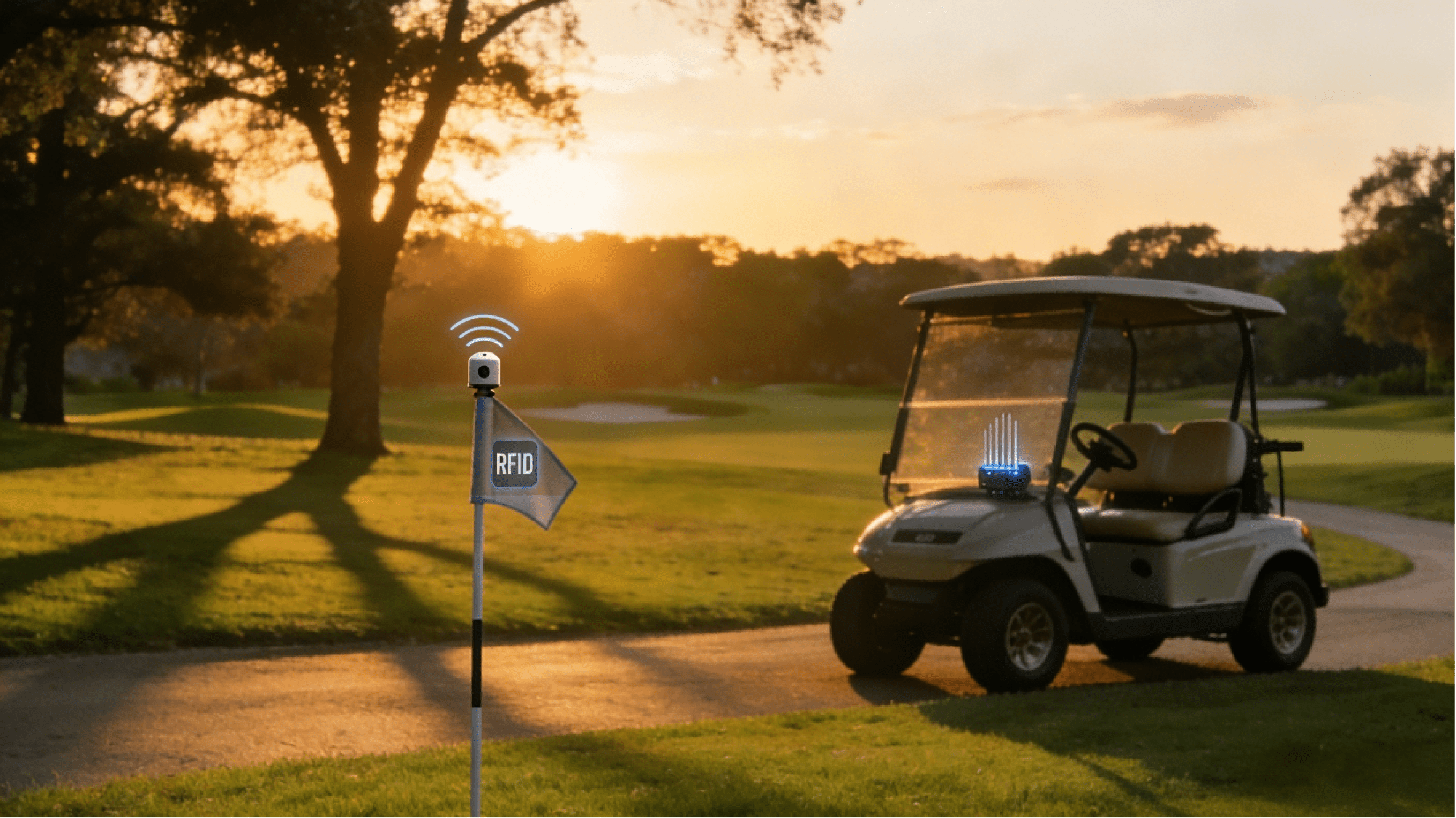
Leveraging technical advantages such as long-distance identification (detection range up to 3-50 meters), simultaneous multi-tag reading (recognizing dozens of tags per second), strong anti-interference (unaffected by terrain and weather), and low power consumption and durability, 2.4G readers, combined with RFID electronic tags (integrated into membership cards, employee IDs, wristbands, etc.), construct an intelligent personnel management system for golf courses. The core application scenarios are as follows:
(I) Real-Time Personnel Positioning and Trajectory Tracking
1.Deployment Logic:
Install 2.4G readers at key nodes of the course to enhance security. These nodes include tees, fairway forks, greens, clubhouse entrances, water body peripheries, and woodland boundaries. This setup will form a full-coverage positioning network. Provide golfers with membership cards or wristbands integrated with RFID tags. Furthermore, equip staff with employee IDs that have built-in tags.
2.Application Value:
Golfer Positioning: The front desk can query golfers’ real-time locations to provide precise shuttle services (such as golf cart dispatch). In case of emergencies, golfers can send a one-click distress call via the tag, and the system quickly locks their position and dispatches rescuers, reducing response time by over 80%.
Staff Supervision: Managers can view real-time trajectories of caddies and security personnel through the backend system. This ensures they provide services and patrol along specified routes, avoiding absences and loafing. Meanwhile, worker records can be traceing. This provides data support for performance evaluations.
(II) Hierarchical Permission Control and Area Access
1.Permission Configuration: Set different permissions based on personnel types (VIP golfers, regular golfers, visitors, caddies, managers, maintenance personnel) and realize area access control through the linkage between 2.4G readers and electronic tags.
2. Application Scenarios:
VIP-Exclusive Zones: Only golfers with VIP tags can enter exclusive clubhouses and driving ranges, preventing unauthorized access and ensuring privacy and service quality.
◦
Restricted Zones: Hazardous areas such as equipment warehouses and power distribution rooms are only accessible to authorized maintenance personnel. Readers record entry and exit information in real time to avoid safety accidents. Closed areas of the course (such as lawn maintenance zones) automatically identify and remind unauthorized personnel to stay away through readers, protecting venue facilities.
(III) Intelligent Attendance and Salary Calculation
1. Attendance Implementation: Staff wear employee IDs integrated with tags. 2.4G readers at key nodes, such as the course entrance, department offices, and work areas, automatically identify tag information. They record on-duty, off-duty times, and working hours. This eliminates the need for manual clock-in.
2.Core Advantages:
Accuracy and Efficiency: Avoids proxy clock-in and missed clock-in. Attendance data is automatically synchronized to the backend, which can be directly retrieved during salary calculation, reducing manual statistical errors and improving financial work efficiency.
◦
Flexible Adaptation: For positions with high mobility such as caddies, it supports dual attendance statistics by service sessions and working hours to meet diverse salary calculation needs.
(IV) Emergency Management and Personnel Counting
1.Emergency Response: In case of extreme weather or sudden accidents, managers can initiate a one-click personnel count through the system. 2.4G readers quickly scan all on-site tags, completing personnel count verification and position positioning within 1 minute to ensure no one is stranded.
2.Passenger Flow Control: During holidays or peak periods, the system real-time counts the total number of people on the course. When approaching the capacity limit, it automatically issues an early warning, allowing the front desk to reasonably regulate the number of incoming guests, avoiding overcrowding, and ensuring service quality and safety.
III. System Advantages and Implementation Benefits
(I) Technical Advantages
1.Strong Environmental Adaptability: The 2.4G frequency band has strong signal penetration, capable of penetrating obstacles such as lawns, woods, and buildings. It works stably under complex weather conditions such as rain, high temperature, and low temperature, with an identification accuracy of 99.8%.
2.Low Power Consumption and Long Battery Life: Electronic tags adopt a passive design, requiring no charging and having a service life of 3-5 years. Readers support POE power supply, featuring easy installation and low maintenance costs.
3.High Scalability: The system can seamlessly connect with the course’s existing management systems (such as membership management systems, cash register systems, and golf cart dispatch systems). In the later stage, functions such as consumption payment and venue booking can be added to achieve integrated intelligent management.
(II) Practical Implementation Benefits
1.Improved Management Efficiency: Personnel positioning, attendance, and permission control are automated, reducing manual input and improving managers’ work efficiency by over 60%.
2.Upgraded Service Quality: Functions such as golfer positioning, precise dispatch, and emergency rescue optimize the service experience, increasing customer satisfaction by 40%-50% and helping the course build a high-end brand image.
3.Reduced Safety Risks: Hierarchical permission control and emergency personnel counting effectively avoid potential safety hazards, reducing the accident rate by 70%.
4.Saved Operational Costs: Reduces labor costs for manual attendance, patrols, and rescues. Meanwhile, it lowers economic losses caused by venue facility damage and safety accidents, saving 15%-20% of annual operational costs.
IV. Application Case Reference
After introducing the 2.4G reader personnel management system, a high-end golf course achieved signal coverage of the entire 1,200-mu area, deployed 86 readers, and equipped over 5,000 members and more than 200 staff with electronic tags. One year after the system was put into operation, the average emergency response time for golfers was reduced from 30 minutes to 5 minutes, the efficiency of staff attendance statistics was improved by 70%, the customer complaint rate decreased by 45%, and the venue facility damage rate dropped by 60%, making it a benchmark case of intelligent management in the industry.
Related Product:2.4 Ghz omnidirectional Active Reader QW-201/Small Size Black Color 2.4Ghz active Tag QW-T09
About the author : Qerwin