
The 2.4GHz Pet Management Revolution(Pet Idenfication): Letting Your Furry Friends Run Free Under the Protection of Technology
“For every minute a pet is lost, their owner endures agonizing torment. In that split second when your furry friend bolts out the door—how fast can *you* run?” If you’ve ever wondered how to find my lost dog quickly best pet collar 2025 could be the solution you need. Pet identification is another crucial factor that can help keep your companion safe.
According to data from the American Pet Products Association (APPA), U.S. households collectively own over 90 million dogs and cats—meaning approximately 71% of American households own at least one pet. Yet, behind these staggering figures, up to 10% of pets still go missing every year. How to ensure your furry companion doesn’t “bolt and vanish” while out and about, traveling, or simply on a daily walk has become one of the most pressing pain points for pet owners worldwide. In this technological battle for protection, 2.4GHz technology is quietly reshaping the rules of pet management.
Many people know that Bluetooth headphones utilize 2.4GHz, and that Wi-Fi routers also start at the 2.4GHz band; however, few realize that this very same frequency band is now—in an energy-efficient, responsive, and stable manner—redefining how we interact with our household pets. In today’s article, we will take you on a comprehensive tour of the four core applications of 2.4GHz pet management systems.
1. Why 2.4GHz? The Core Technical Logic Behind the Frequency Band?
Before diving deep into 2.4GHz pet management devices, let’s start with a quick primer: What exactly does 2.4GHz mean?
2.4GHz refers to the frequency of radio waves. It belongs to the globally universal ISM (Industrial, Scientific, and Medical) band, which is license-free. This means that any compliant device can operate within this band without the need to apply for a specialized license. Wi-Fi, Bluetooth, ZigBee, wireless mice and keyboards, and even microwave ovens all coexist within this frequency band.
For pet management devices, the 2.4GHz band offers several key advantages:
Global Compatibility + License-Free Use: Whether in the U.S., Europe, or Asia, 2.4GHz devices can be used immediately without undergoing cumbersome certification processes. This serves as the foundation for the global sales strategies of international pet brands such as Fi, Tractive, and PETLIBRO.
Balanced Range and Penetration: While frequency bands lower than 2.4GHz can transmit signals over longer distances, their data rates are too low. Conversely, bands higher than 2.4GHz (such as 5GHz) offer weaker penetration capabilities and consume more power. The 2.4GHz band strikes a delicate balance between medium-to-long-range communication, the ability to penetrate standard indoor walls, and energy efficiency—making it both practical and reliable.
Multi-Device Coexistence: You can use a Bluetooth collar (operating on 2.4GHz) to track your pet while simultaneously using your smartphone (also utilizing 2.4GHz Wi-Fi) to control a companion app—all while your neighbor’s wireless devices are also in operation. The mechanisms for managing potential signal conflicts are highly mature.
Mature Technical Ecosystem: The 2.4GHz band is a highly standardized frequency spectrum, supporting various technical protocols including Bluetooth, ZigBee, proprietary 2.4G protocols, and Wi-Fi. Pet device manufacturers can leverage mature chipset solutions (from providers such as Nordic, TI, and Realtek) to rapidly develop stable, energy-efficient pet collars, containment systems, or automatic feeders.
2. Scenario 1: The Ultimate Anti-Loss Tool — 2.4GHz Pet Tracking and Localization
A pet going missing is the nightmare scenario feared most by every pet owner. By combining 2.4GHz technology with RF (Radio Frequency) or Bluetooth, a low-cost, subscription-free, and user-friendly anti-loss solution is now available for households.
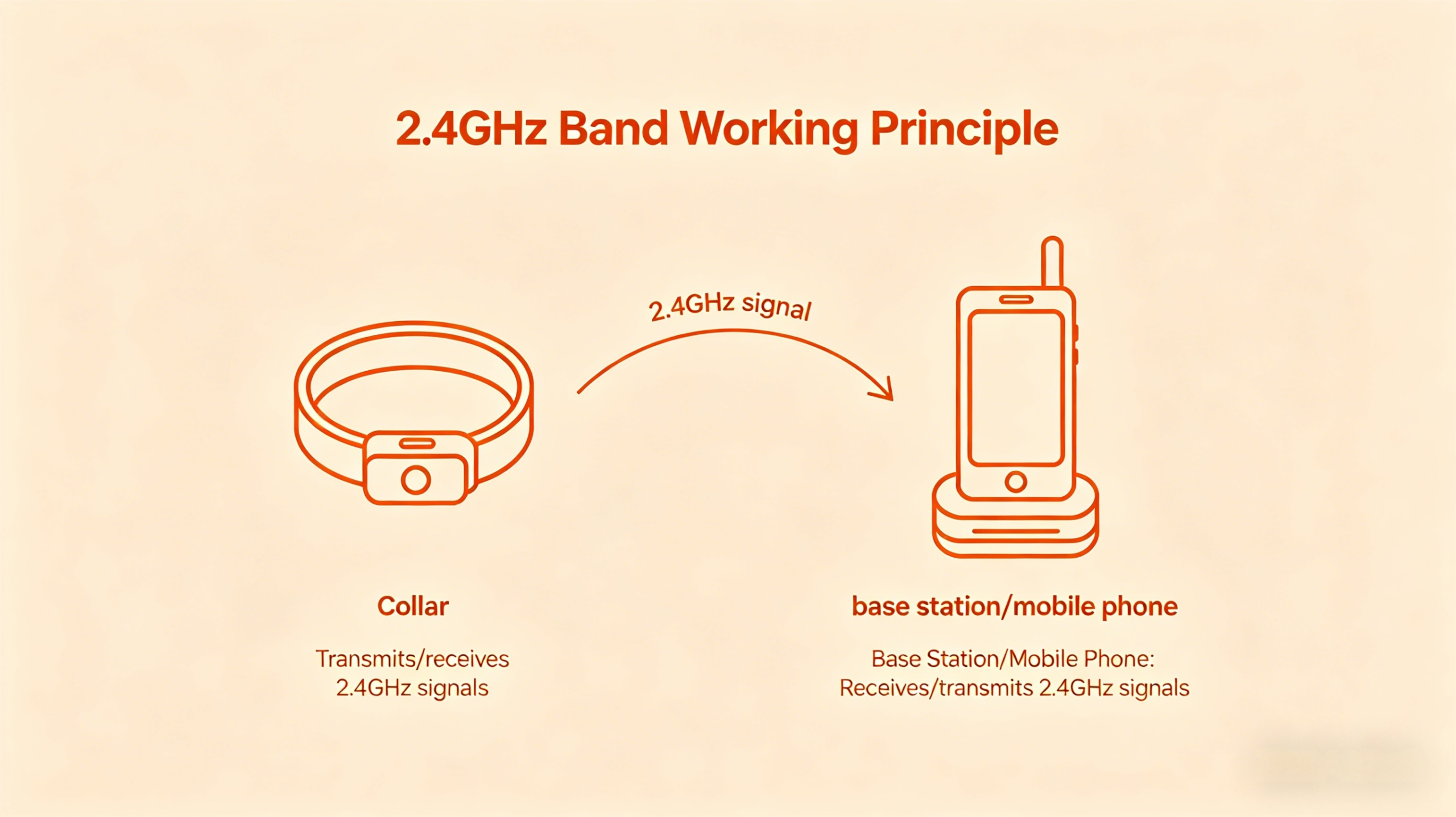
How It Works: The pet collar features a built-in, low-power 2.4GHz transmission module, while a base station or receiver continuously monitors for nearby signals. If the pet wanders beyond a pre-set range, the base station will emit an audible beep or alert; alternatively, the base station’s screen may display directional cues—utilizing changes in 2.4GHz signal strength to help you pinpoint exactly which direction your furry friend has headed. These devices require neither GPS nor a SIM card; they are significantly more energy-efficient than standard GPS-based solutions and incur absolutely no monthly subscription fees.
Real-World Product Data: A typical 2.4GHz pet tracker currently on the market (such as the Girafus 227PA) offers a tracking radius of up to 500 meters. With a single charge—assuming 10 minutes of daily searching—the base station boasts a battery life of up to 120 days, while the collar itself lasts for an impressive 30 days. With zero ongoing operational costs, a single base station can simultaneously track up to four pets. The collar itself weighs a mere 4.2 grams—so light that the pet will barely even notice it is there.
Application Scenarios:
- During a nighttime walk, the pet suddenly slips off its leash and runs into the woods;
- While playing in the backyard, a gate is left slightly ajar, allowing the pet to slip out into a neighbor’s yard;
- Inside a large, multi-story home, the pet hides inside a closet to nap and cannot be found.
3. Scenario 2: Electronic Fencing + Remote Training — Invisible Boundary Protection
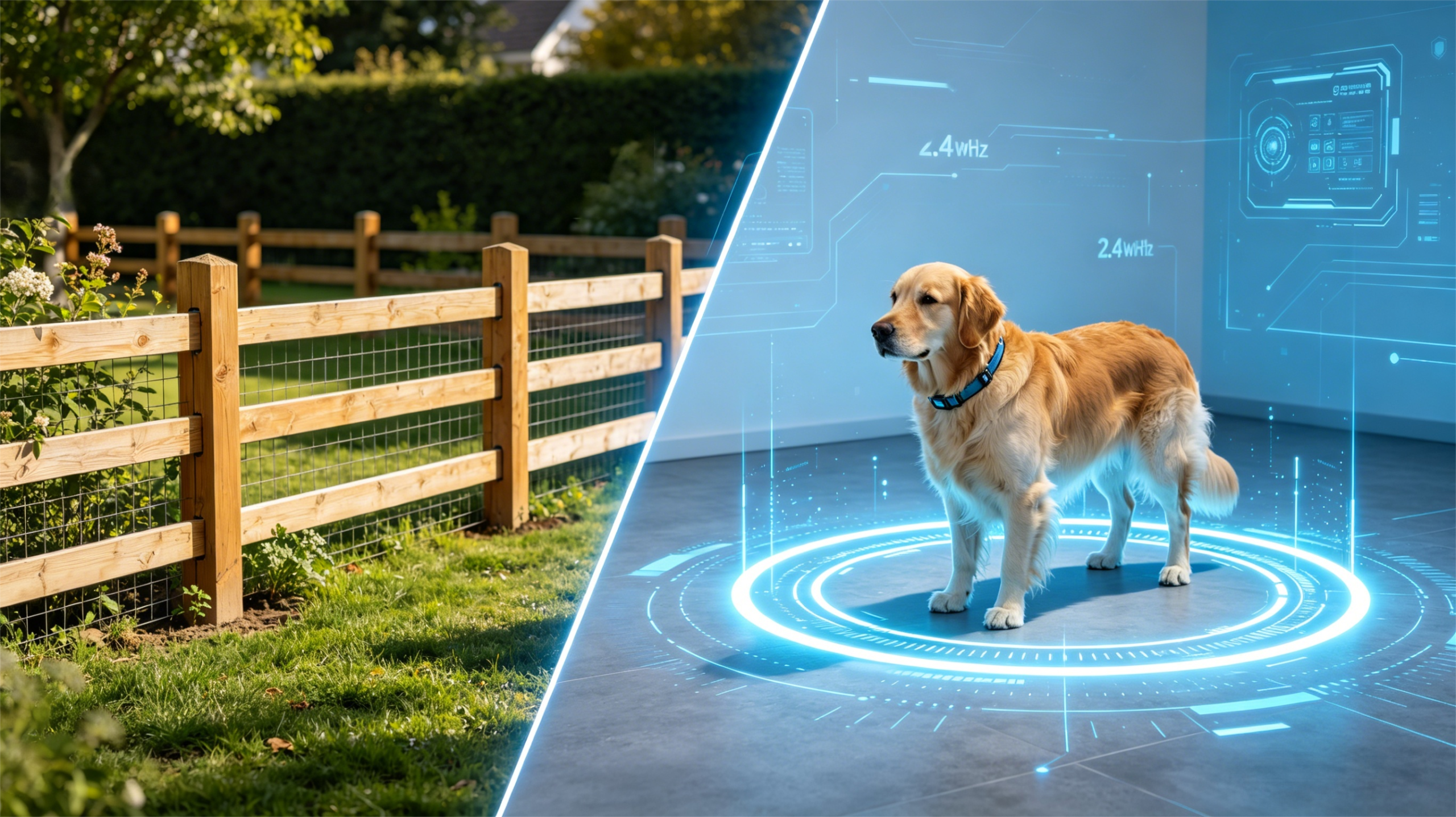
Electronic fencing represents another standout application of 2.4GHz technology. A typical 2.4GHz wireless dog fence system consists of a single transmitter base station paired with multiple receiver collars, allowing users to define a customized circular or radial safety boundary surrounding the transmitter. The base station transmitter offers a highly adjustable signal range, spanning 16 distinct levels—from a radius of 30 feet (approx. 9 meters) up to 990 feet (approx. 300 meters).
How It Works: Whenever a dog wearing a collar attempts to cross this invisible boundary, the collar initiates a three-stage response sequence:
First, it emits an audible tone (a warning signal);
If the dog continues to advance, it switches to vibration mode (a gentle reminder);
Finally, it triggers a safe, very low-voltage static correction (though users have the option to disable the static stimulation, retaining only the audio and vibration alerts).
All correction intensities are fully controllable and adjustable across various levels to accommodate dogs of different breeds and sizes. Particularly for dogs sensitive to vibrations or for senior dogs, manufacturers often provide physical buffering accessories—such as “silicone caps”—to completely isolate the low-voltage static stimulation from the dog’s skin.
Notably, this system can also be switched—with the press of a single button—into “Remote Training Collar Mode.” A single handheld remote unit can simultaneously control up to four dogs, making it an ideal solution for multi-pet households or professional dog training environments.
4. Scenario 3: Smart Health Monitoring +Comprehensive Care Beyond Location Tracking
Location tracking is merely one facet of their functionality; modern 2.4GHz smart pet collars are increasingly integrating GPS, AI, and health monitoring capabilities into a single device.
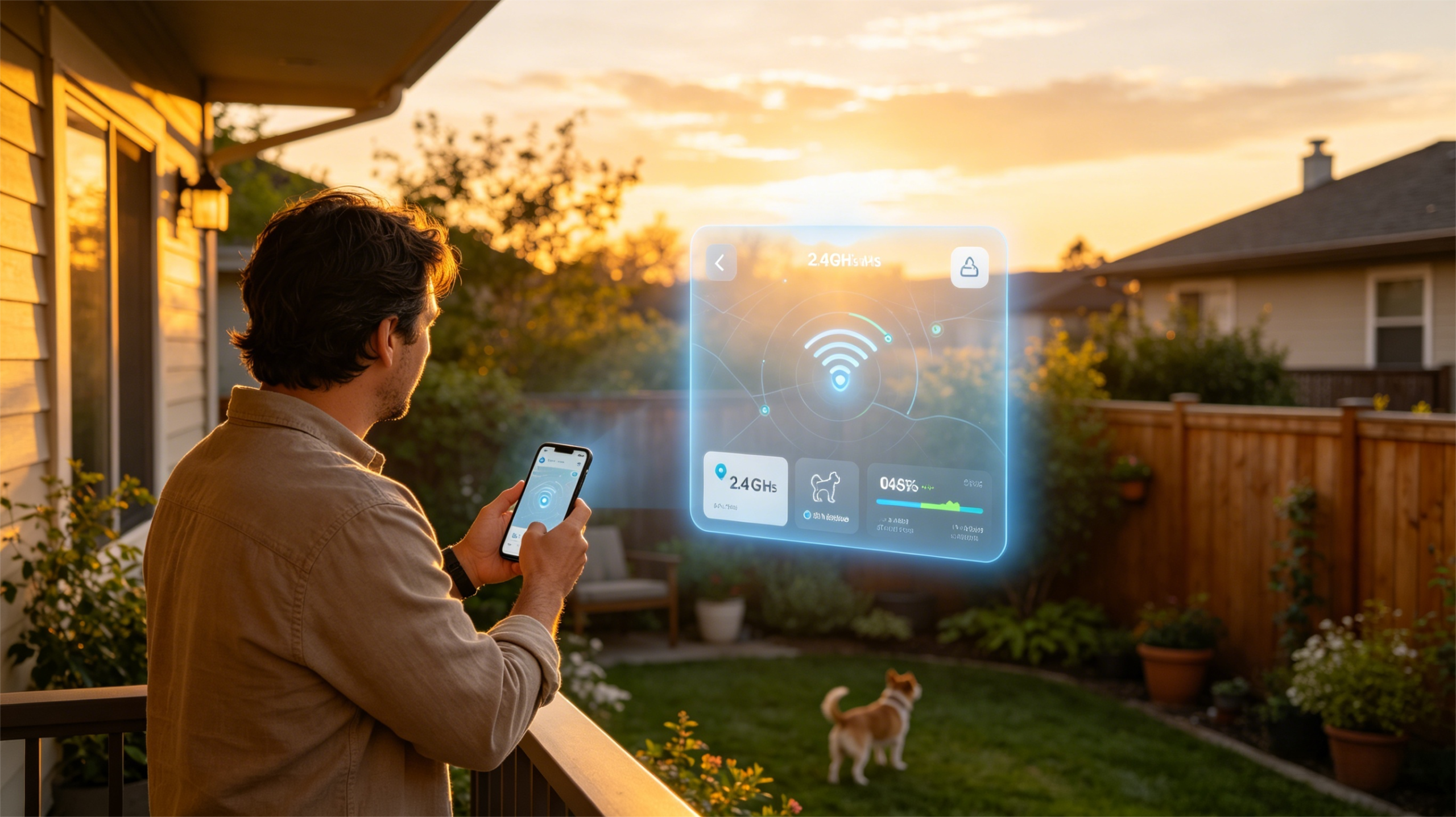
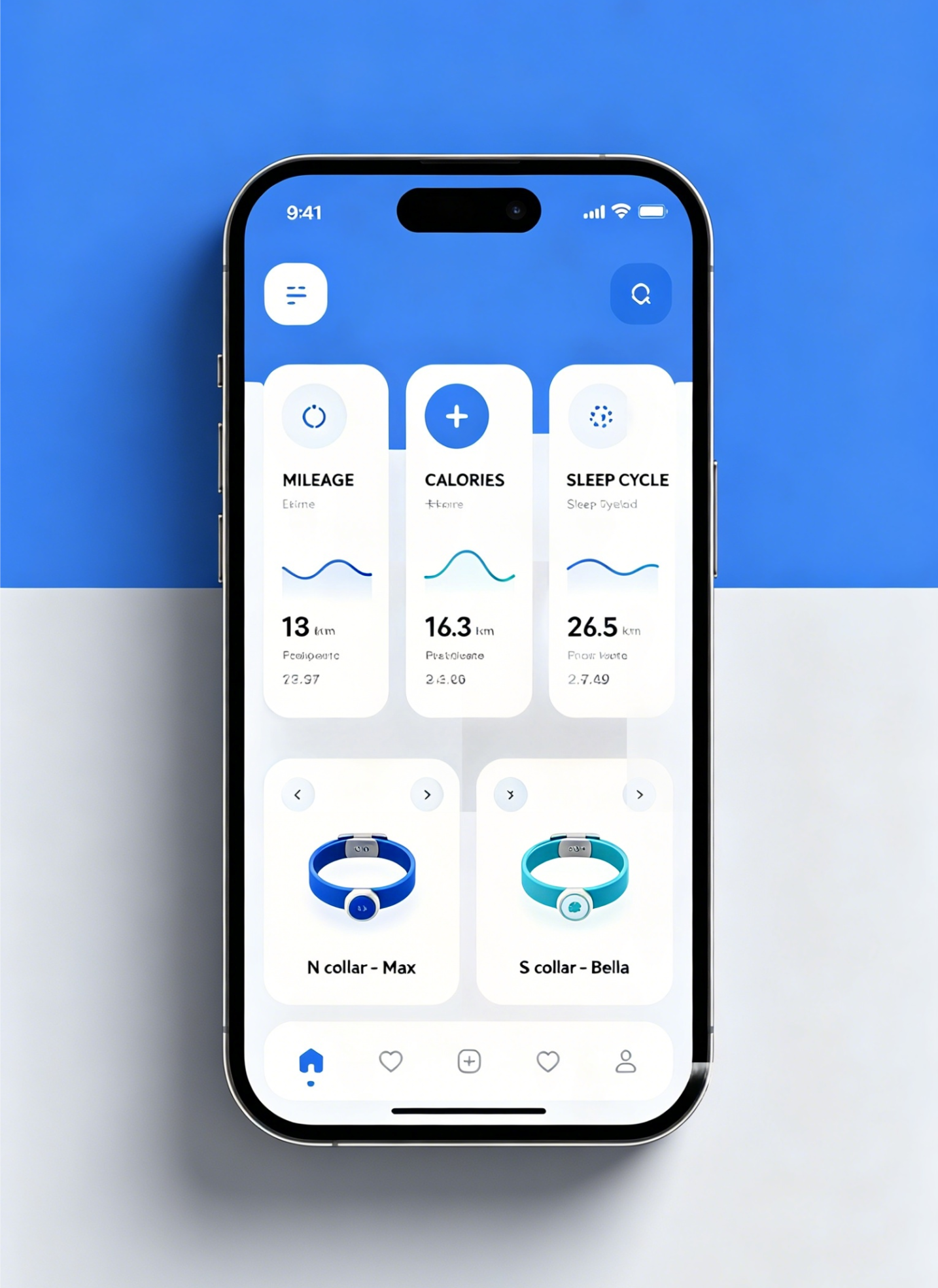
Leveraging the low-power communication capabilities of the 2.4GHz frequency band, sensors embedded in the collar continuously collect data—such as the pet’s heart rate, step count, sleep quality, and activity levels—and transmit this information back to a companion mobile app.
Experts at Australia’s Commonwealth Scientific and Industrial Research Organisation (CSIRO) once developed the “Companion Collar”—a device featuring a built-in dual-mode system that switches between 2.4GHz Bluetooth and GPS.
For close-range tracking, it utilizes an energy-efficient Bluetooth mode; when the pet is at a distance or outdoors, it automatically switches to GPS to ensure they are never lost. Furthermore, high-end products such as SATELLAI offer an AI-powered pet care assistant. You need only ask your phone—for instance, “Did my dog get enough exercise today?”—and the system will provide a data-driven health summary, complete with an integrated large-language-model-based “pet coach” offering personalized advice.
Additionally, radiation safety remains a perennial concern for pet owners. A 2021 study conducted by the University of Veterinary Medicine Vienna concluded that the electromagnetic radiation exposure experienced by pets wearing tracking devices (specifically GPS and Bluetooth) falls far below international safety standards, implying that adverse health effects are extremely rare. From a scientific standpoint, this technology is safe for pets’ health.
5. Scenario 4: Dual-Band Wi-Fi Smart Feeding — The Ultimate Expression of Remote Affection
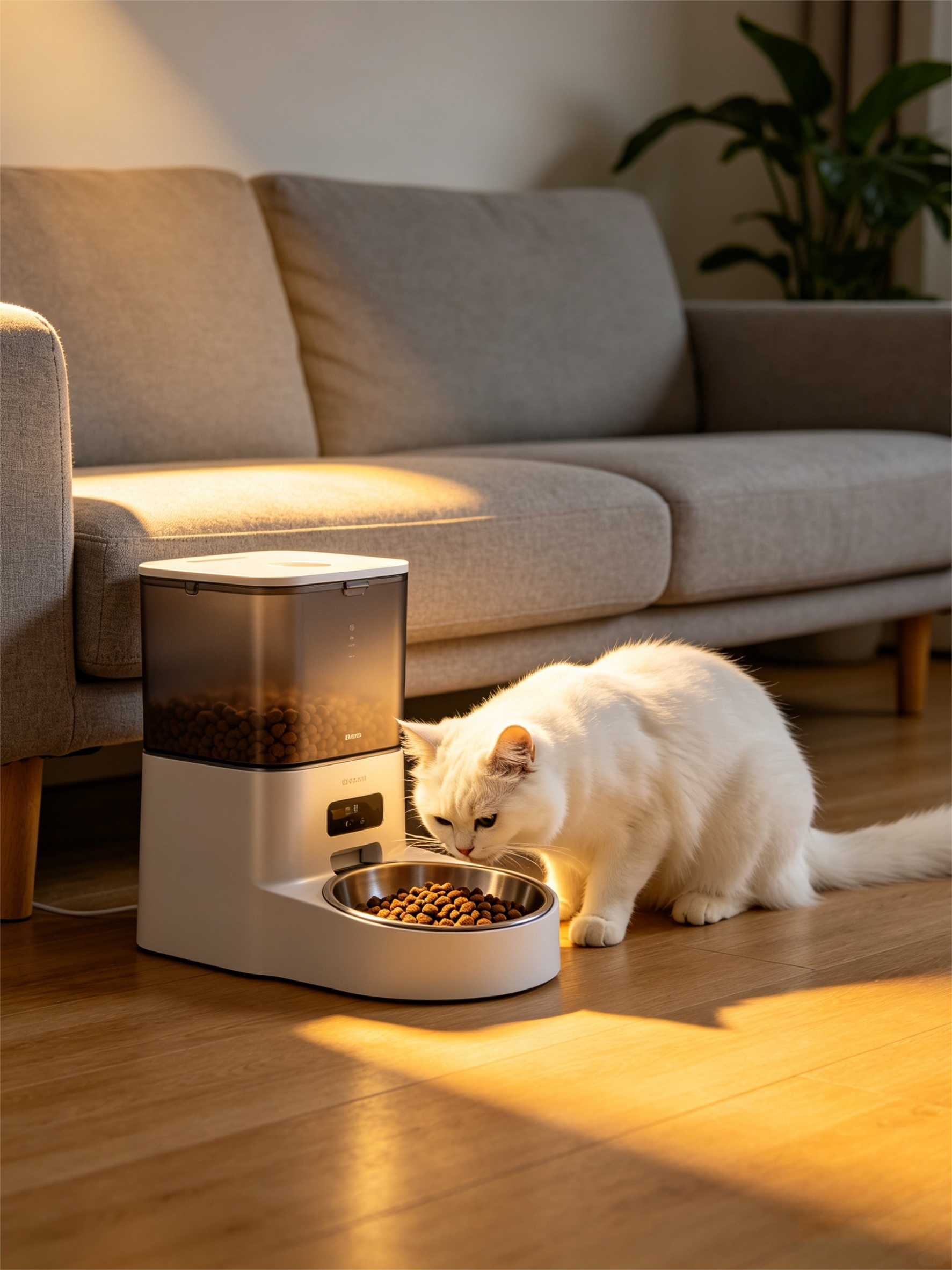
We no longer regard smart pet feeders as mere “automated food dispensers”; we have developed them into comprehensive smart care hubs with two-way audio, real-time monitoring, portion control and remote operation functions.
The most advanced automatic feeders currently on the market typically support dual-band Wi-Fi (both 2.4GHz and 5GHz) simultaneously. Why dual-band?
Frequency Band :2.4GHz Advantages : Strong wall-penetration capability; wide coverage area
Applicable Scenarios :This feature works perfectly when you place the feeder far from the router or position it in corners and areas with physical obstructions.
Frequency Band :5GHz Advantages : Less interference; faster response speeds
Applicable Scenarios :Ideal when the device is close to the router, ensuring smoother real-time treat dispensing (calling the pet by name) and video monitoring.
These feeders typically feature a built-in HD camera with night vision, allowing you to monitor your dog’s eating habits in real time. They also integrate two-way audio functionality, enabling owners to call out their pet’s name via smartphone and remotely dispense small portions of freeze-dried food or treats for entertainment. The device offers precise portion control (adjustable in increments of 1/12 cup) and allows you to pre-schedule up to 30 meals per day—all without the need for physical manual adjustments—making business trips and vacations completely stress-free.
Conclusion: Letting Technology and Love Go Hand in Hand
Pet ownership represents the intersection of emotional fulfillment and a sense of responsibility. The widespread adoption of 2.4GHz technology—distinguished by its low cost, minimal interference, and mature stability—is making remote pet care easier than ever before. With nothing more than a smartphone, you can ensure that your pet remains safe within secure boundaries, benefits from precise location tracking, and enjoys the companionship of health monitoring and scheduled feeding—even when you are thousands of miles away.
In light of the reality that up to 10% of pets go missing each year, equipping your beloved companion with a smart collar powered by 2.4GHz technology—or installing a wireless containment system at home—may well be the greatest gift of peace of mind you can give to both your pet and your own anxious self.
About the author : Qerwin